Theft in a commercial property rarely looks like a film-style robbery. More often it is stock that slowly goes missing, a laptop that walks out of an office, copper cable taken from a site at night, or cash that does not match the day’s bills. CCTV helps with all of these, but only when the system is designed around how theft actually happens on your premises.
This article explains the four ways CCTV reduces theft in offices, shops, warehouses and other commercial properties, and the design choices that make each one work.
1. Deterrence: Making Theft Look Risky
Visible cameras discourage opportunistic theft by both outsiders and insiders. Deterrence works best when:
- Cameras are clearly visible at entrances, gates, loading bays and cash points.
- Signage states that the premises are under CCTV surveillance.
- Staff know that stock areas and cash handling are recorded.
- Outdoor areas are well lit, so cameras are not just decorative at night.
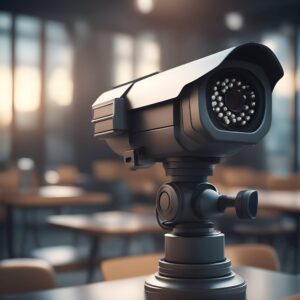
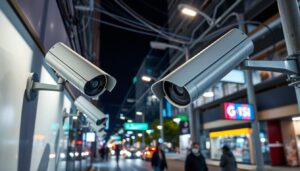
Bullet cameras are often used outside because their shape is recognisable; domes suit interiors where a discreet look is preferred.
2. Detection: Knowing When Something Is Wrong
A camera that records a theft at 2 AM is useful. A camera that alerts you at 2 AM is better. Modern systems can:
- Send mobile alerts when a person or vehicle is detected in a defined zone after hours.
- Trigger on line-crossing at a compound wall, gate or fence.
- Flag tampering, such as a camera being covered or moved.
- Work together with a burglar alarm system so a door sensor or motion sensor triggers a siren and an alert.
Human and vehicle detection is important here. Basic motion detection reacts to rain, animals and headlights, and alerts that go off all night soon get ignored.
3. Response: Acting Quickly
Remote viewing on a mobile phone lets an owner, manager or security supervisor check an alert immediately and decide whether to call security staff or the police. Some cameras include a speaker so you can warn an intruder directly; our guide on cameras with built-in mic and speaker explains how two-way audio works.
4. Evidence: Proving What Happened
When theft is discovered later, recorded footage helps you establish what happened, when and who was involved. For footage to be useful as evidence:
- Faces and vehicle number plates must be clear at key points such as entrances and gates.
- The recorder’s date and time must be correct.
- Recording must be kept long enough, since stock losses are often noticed weeks later.
- Someone should know how to export a clip without disturbing the original recording.
Internal Theft: The Part Most Businesses Underestimate
In many businesses, losses from inside are as significant as break-ins. CCTV supports internal controls when cameras cover:
- Cash counters and safes.
- Stockrooms and goods-in and goods-out points.
- Staff entry and exit points.
- Areas where high-value tools or materials are stored.
Combining CCTV with access control systems adds a record of who entered a restricted room and when, which you can match against the footage.
Theft Risks by Property Type
| Property | Common theft risks | Where cameras matter most |
|---|---|---|
| Retail shop or showroom | Shoplifting, cash discrepancies, stock leakage | Entrance, billing counter, displays, stockroom |
| Office | Laptops, equipment, documents | Reception, entry points, server or store room |
| Warehouse | Stock leakage, theft during loading | Loading bays, gates, racks, perimeter |
| Factory or industrial unit | Raw material, scrap, tools, cable | Gates, stores, scrap yard, perimeter |
| Construction site | Materials and equipment at night | Site entrance, material storage, perimeter |
For shops in particular, see our detailed guide on CCTV for retail shops and showrooms.
Design Mistakes That Let Theft Go Unrecorded
- Cameras covering wide areas but not the specific points where goods or cash change hands.
- No camera on the back door, loading bay or scrap area.
- Cameras facing bright gates or glass fronts, so faces and number plates are unreadable.
- The recorder kept in an open area, where it can be switched off or removed.
- No UPS, so a deliberate power cut stops recording.
- Storage that only keeps a few days of footage.
Commercial Security in Chennai
Commercial properties in Chennai range from small shops to large industrial estates. Units in Ambattur and multi-tenant buildings in Perungudi face different risks from a showroom on a busy main road, so the camera plan should follow the property, not a standard package. Our CCTV installation cost guide explains how the size and layout of a site affect the quotation.
Frequently Asked Questions
Do CCTV cameras really reduce theft?
Visible, well-placed cameras deter opportunistic theft, alerts allow faster response, and recordings help investigate losses. The effect is strongest when CCTV is combined with good lighting, alarms and internal controls.
Can CCTV footage be used as evidence?
Footage can support a police complaint or internal investigation. It is most useful when faces are clear, the date and time are correct and the original recording is preserved.
How long should a business keep CCTV recordings?
It depends on your risks and any industry or client requirements. Many businesses aim for several weeks, since stock discrepancies are often found during monthly audits.
Should I use alarms as well as CCTV?
Yes, for after-hours protection. An alarm reacts immediately to a break-in, while CCTV records and helps you verify what triggered the alarm.
Protect Your Commercial Property
E-Sync Security Solutions designs and installs CCTV, alarms and access control for offices, shops, warehouses and industrial units. Talk to us about CCTV installation for businesses in Chennai: call or WhatsApp +91 8682826272, message us on WhatsApp or use our contact page.